
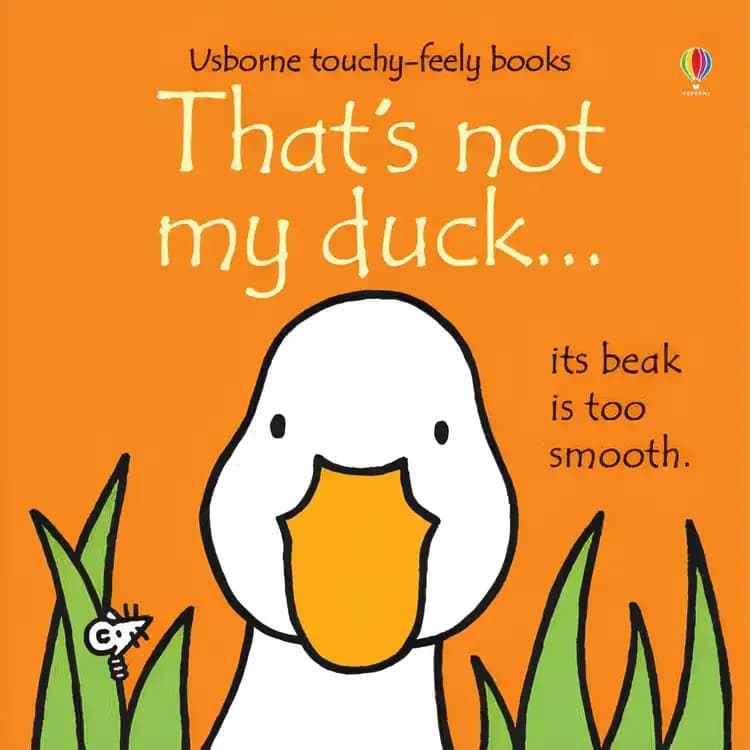
That's Not My Duck...
That'S Not My... Series
What’s inside...
Part of the 'That's Not My...' series, this book features a series of textured pages that encourage young readers to explore and engage in a sensory experience as they search for the duck that 'feels' right. Each page introduces a different duck with various textures, building anticipation until the child finds the duck they're looking for. Part of the bestselling, touchy-feely That's not my... series, which has sold millions of copies worldwide. Meet five friendly ducks in this exciting addition to the much-loved That's not my… series. Babies love the best-selling That's not my… books with their bold illustrations, patches to stroke, and a mouse to spot on every page, all designed to develop sensory and language awareness.
Series reading
Non-Sequential
Age
2-6
Length
10 pages
Text complexity
Discussion points
What makes the duck in the book different from other ducks you know?
How do you think the duck feels when it's described in different ways?
Can you think of other animals with unique features?
Why is it important to notice and appreciate differences?
How would you describe your favorite animal?
Tip: Role play these questions
Use expressive voices for different characters to make the reading more dynamic and engaging.
Encourage your child to touch and feel the book’s textured pages, enhancing sensory involvement.
Ask your child to guess what might be on the next page, fostering anticipation and interactive reading.
Relate the descriptive words in the book to objects around the house to deepen understanding of adjectives.
After reading, encourage your child to draw their version of the ‘perfect duck’, incorporating elements from the story.
Key lessons
Example Lesson: Sensory Exploration
Explanation: Through interactive textures on each page, 'That's Not My Duck...' encourages children to learn through touch, enhancing sensory development.
Real-World Application: Children can apply this lesson by exploring different textures in their environment, promoting curiosity and engagement with the world around them.
Example Lesson: Understanding Differences
Explanation: The book helps children differentiate between various ducks by focusing on unique attributes, fostering observational skills.
Real-World Application: This can teach children to appreciate the uniqueness in everyone they meet, understanding that differences make each person or thing special.
Example Lesson: Language Development
Explanation: Repetition of simple phrases like 'That's not my duck...' helps reinforce language patterns and assists in vocabulary building.
Real-World Application: This repetitive and rhythmic approach can aid children in developing communication skills, using what they've learned during interactions with others.
Example Lesson: Patience and Persistence
Explanation: The protagonist searches through several ducks before finding 'their' duck, illustrating the values of patience and perseverance.
Real-World Application: Children can mirror this approach when facing challenges, learning to be patient and persistent in solving problems or completing tasks.