
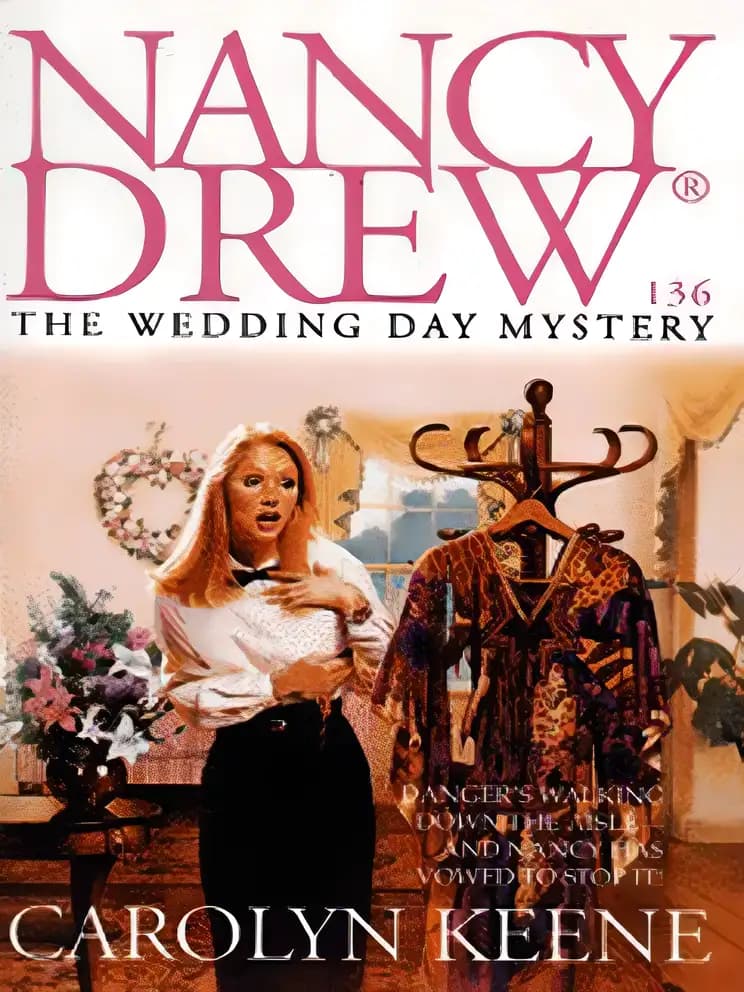
The Wedding Day Mystery (Nancy Drew Mysteries Book 136)
#136 of 163 in Nancy Drew Series
on Goodreads (417)
What’s inside...
A thief, a saboteur and a ghost are just some of the things that Nancy has to contend with during a weekend spent helping out at Heights House, an old mansion on the outskirts of town. She is there to help with the wedding arrangements for 4 marriages. Helping her wedding-planner friends during a four-wedding weekend, Nancy is surprised when one of the weddings, which is being held at an old mansion, is targeted by someone who is trying to impersonate a ghost. Original.
Discussion points
What do you think motivated Nancy to solve the mystery at the wedding?
How did Nancy's friendships help her during her investigation?
What roles do trust and teamwork play in solving mysteries, based on the book?
If you were in Nancy's shoes, how would you have approached the mystery differently?
What did you learn about handling unexpected challenges from Nancy's experiences?
Tip: Role play these questions
As you discuss the book, encourage your child to think about the qualities that make a good detective, like observation skills and critical thinking.
Use examples from the book to illustrate how teamwork and cooperation lead to success in solving problems.
Relate the mystery-solving aspects of the book to real-life situations by asking your child how they would handle similar challenges.
Encourage your child to predict future events in the story or to invent their own mystery based on the characters and settings described.
Praise your child’s insights and imagination as they answer questions and come up with their own ideas about the story.
Key lessons
Example Lesson: Problem-solving skills
Explanation: Throughout 'The Wedding Day Mystery,' Nancy Drew showcases excellent problem-solving skills as she unravels the mysteries surrounding disruptions at a wedding. Her logical approach and keen observation are pivotal in solving the case.
Real-World Application: Children can apply problem-solving skills in their daily experiences, such as figuring out how to resolve disputes with peers or completing challenging tasks at school.
Example Lesson: Teamwork
Explanation: Nancy often collaborates with her friends Bess and George to gather clues and insights. This teamwork is essential in piecing together the puzzle and preventing the wedding day disaster.
Real-World Application: This can teach children the importance of working with others to achieve common goals, whether in school projects, sports, or family activities.
Example Lesson: Attention to detail
Explanation: Nancy’s success often depends on her attention to small, seemingly insignificant details. Her ability to notice and connect these details helps her to solve the mystery.
Real-World Application: Children can learn to be more observant and detail-oriented, skills that are valuable in academic settings and personal development.
Example Lesson: Perseverance
Explanation: Despite challenges and setbacks, Nancy remains determined and does not give up on solving the mystery, showing resilience throughout the book.
Real-World Application: This can inspire children to persist in facing their own challenges, emphasizing the importance of resilience in achieving one's goals.
Example Lesson: Ethical decision-making
Explanation: Nancy faces several moral dilemmas throughout her investigation. She consistently chooses to do what is right, even when it is difficult.
Real-World Application: This highlights the importance of integrity and can influence children to make ethical choices even in tough situations.