
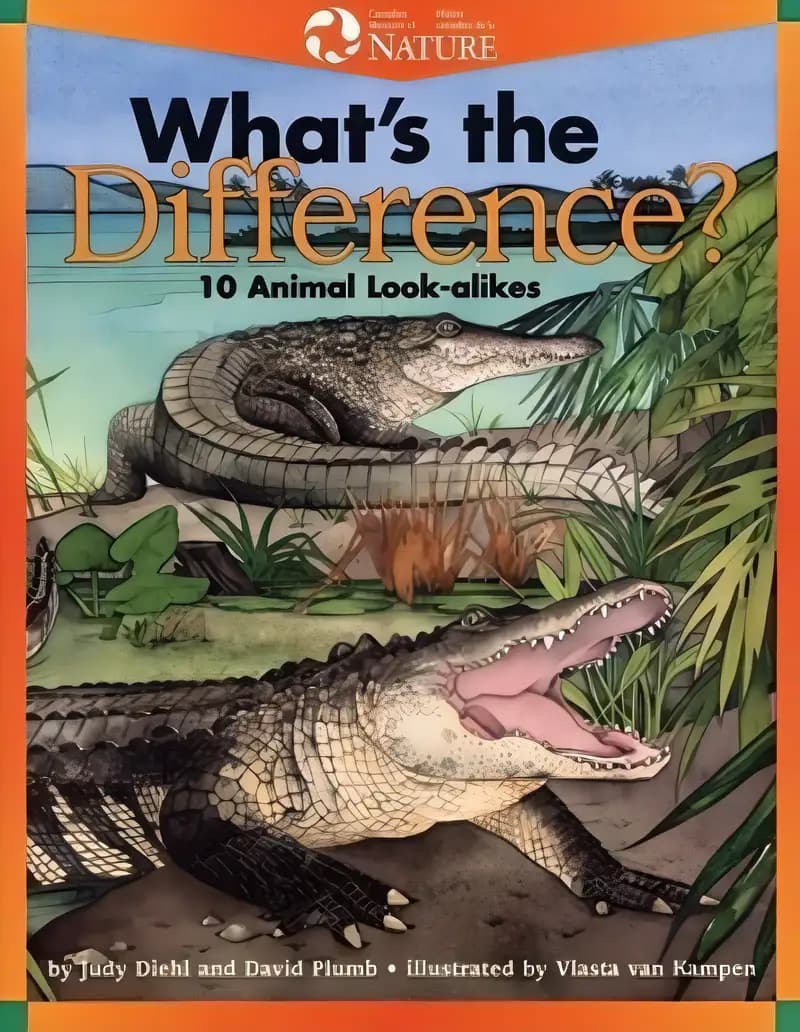
What's the Difference?
What’s inside...
What's the Difference? is a book that helps curious kids learn about the differences between commonly confused animals. Through clear and colorful illustrations, ten animal pairs such as alligators and crocodiles, butterflies and moths, and frogs and toads are vividly depicted in their natural environments for easy comparison. Other animal comparisons include cheetahs and leopards, donkeys and mules, dolphins and porpoises, and more. Developed with the Canadian Museum of Nature, the book includes a helpful glossary of terms.
Age
5-8
Length
24 pages
Text complexity
Discussion points
What did you notice about how the animals in the story are different from each other?
Why do you think it's important to recognize and celebrate differences?
How do you feel when you meet someone who is different from you?
Can you think of a time when you learned something new from a friend who is different from you?
What would you do if you saw someone being treated unfairly because they were different?
Tip: Role play these questions
Use a warm and curious tone to make the child feel comfortable sharing their thoughts and experiences.
Relate the questions to the child’s personal life to make the themes more relevant and engaging.
Encourage the child to come up with examples of diversity from their own environment, such as school or the playground.
Highlight the positive aspects of recognizing and appreciating differences in others as portrayed in the book.
Listen actively and validate the child's feelings and opinions to foster an open and trusting dialogue.
Key lessons
Example Lesson: Celebrating Diversity
Explanation: Through the exploration of various animals and their unique traits, 'What's the Difference?' teaches children to appreciate and celebrate differences.
Real-World Application: Children can learn to embrace diversity among their peers, understanding that everyone has something special to offer.
Example Lesson: Curiosity and Learning
Explanation: The book encourages children to ask questions and explore the natural world, fostering a love for learning.
Real-World Application: This can inspire children to ask more questions in their daily interactions and to seek out knowledge actively, both inside and outside the classroom.
Example Lesson: Observation Skills
Explanation: By comparing different animals, children enhance their observation skills, learning to pay attention to detail.
Real-World Application: These skills can help children in academic settings as well as in everyday problem-solving and creative thinking.
Example Lesson: Critical Thinking
Explanation: The book prompts readers to think about why animals have certain characteristics, promoting critical thinking.
Real-World Application: This encourages children to not just accept information as it is but to delve deeper into understanding the 'why' behind things.